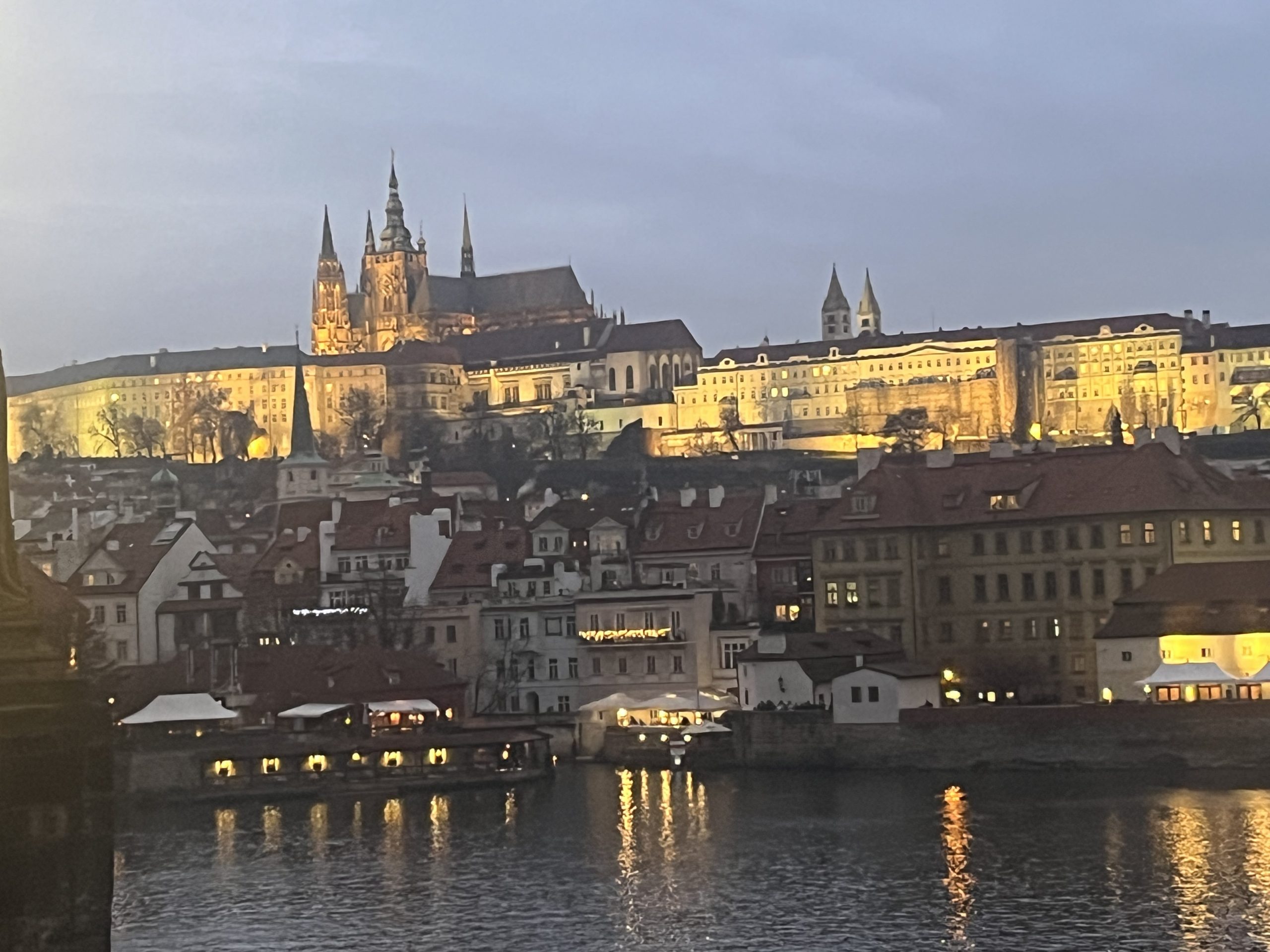
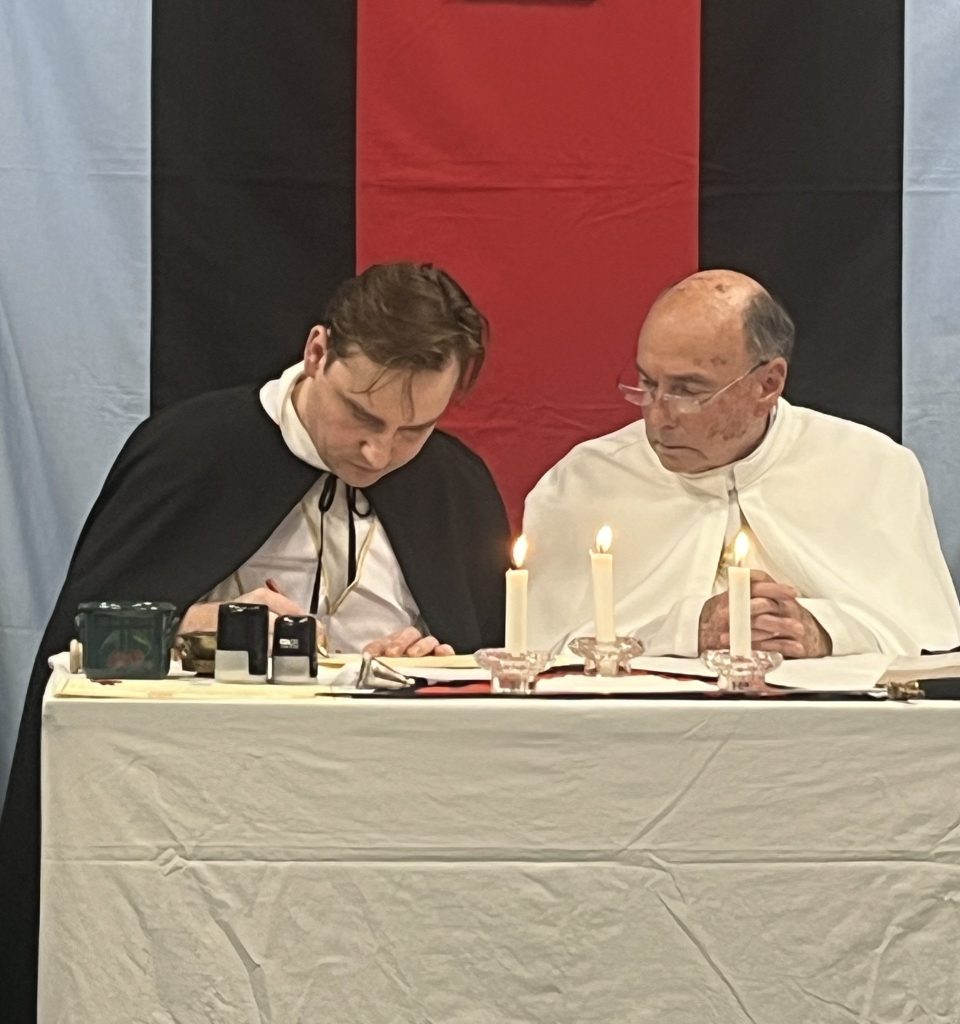
Interview with our brother David P, Grand Master of the Martinist Order of Bohemia, with whom we signed a Treaty of Friendship in October.
After several visits to France and Prague, bonds of friendship and brotherhood have been forged. Without wanting to paraphrase our brother: “this treaty is not just a piece of paper!”
1. Could you share with our readers the history and spiritual foundations of the Martinist Order of Bohemia, as well as its lineage within the wider international Martinist family?
I will try to be as brief as possible. In Bohemia, we continue a strong tradition of Martinism, founded by Adolf Franz Baron Leonhardi in 1892. He maintained a personal and written relationship with Papus. Their conversations can be found in the archives of the Municipal Library in Lyon in the Papus collection. The Czech brothers were thus among the first to bring the light of Martinism out of France. They received charter number 12 from Papus himself.
Martinism prospered well in our countries. In 1918, the newly founded Czechoslovak Republic emerged from the womb of the original Austro-Hungarian monarchy and fought for its place in the field of spiritual studies. At that time, the already strong Martinist movement rejected the post-war French headquarters' demand to merge with Freemasonry. For some time, the Czech brothers and sisters were left alone (though they were never officially expelled). They themselves declared that they wanted to remain on friendly terms with the French headquarters.
It was mainly our last Grand Master, Petr Kohout (operating under the name Pierre de Lasenic, 1900-1944, order name Milan), who succeeded in restoring the traditionally excellent relations with France. He was a close personal friend of Constant Chevillon. For some time, he lived in Paris and participated in the local spiritual life. After returning to Czechia, he became the sole grand delegate and grand master for the Czech lands.
He shares a tragic fate with Constant Chevillon. Like him, Pierre de Lasenic died under the yoke of Nazi occupation at the age of 44. Since then, official Czechoslovak Martinism has been in ruins. Efforts to revive it were quickly extinguished by the rise of communism and its dictatorship.
Nevertheless, the light of Martinism did not fade completely. The last disciples of the beloved master Milan gathered and continued to meet, especially during the years of greatest oppression, without performing rituals. Later, traditional rituals began to be used again. And it is they, and their disciples, who are our masters. Some of them lived to see the restoration of proper Martinist work in our country; others did not. Nevertheless, they played a significant role in passing on the tradition that we carry on to this day.
2. How does the mission of the Martinist Order manifest today in the Czech Republic, both in its initiatic work and in its cultural or symbolic presence?
Today, the Martinist Order, as we lead it, represents above all an intense initiation centre, whose primary mission is to light the way for seekers and help members fulfil their degrees. To this purpose, we publish books from the Czech and international Martinist tradition and from currents compatible with Martinism. By the end of 2025, we had published 32 titles in Czech and 5 in English. In addition to the public series, we also have a private edition of 10 volumes and publish the bilingual Martinist Bulletin OMB. We also participate in charitable activities, but that should be everyone's duty.
3. In your view, what are the unique characteristics of Martinist tradition as it expresses itself within the cultural and spiritual context of Central Europe?
The aforementioned 50 years of repression affected people's attitudes. The tradition became much more private and intimate. At the same time, it was much more difficult to access. For a long time, people were less trusting and essential matters were communicated in secret and in private. Some of this aloofness and caution has persisted to this day.
4. During the Papus Days held in Paris in October 2025, a treaty of friendship and mutual recognition was signed between the Martinist Order of Bohemia and the Ordre Martiniste. Could you tell us more about the meaning of this historic act and what it represents for the unity of the Martinist movement?
For us, this is the culmination of many years of effort to demonstrate the vitality of our tradition. When we got back in touch with the Ordre Martiniste, we were happy, even though we never dared to hope for such a warm, cordial, and sincere welcome. When we realised that the last such agreement had been concluded in 1965, we felt incredibly honoured and privileged to follow in the footsteps of our masters.
Today's world often tries to divide us. Many people focus on a few differences and overlook the fact that we usually have much more in common. We abandon relationships, families, and friendships over trivial matters. Commitments become a burden. But it is precisely these commitments that show us our freedom. Our common agreement is such a commitment. A commitment that the idea of Martinism and the freedom that comes with it is more important to us than the pursuit of pleasure and power. A commitment that we will give what we have received for free to others for free. A commitment of an open heart, because without the participation of the heart, it is just a piece of paper.
5. How do you perceive the evolution of Martinism in the 21st century, especially in relation to the new generations and the broader spiritual transformations of our time?
Martinism has something to offer the younger generation thirsting for spirituality. It shows that there is no need to seek profound ideas beyond Europe's borders. The teachings of India or Tibet, shamanic religions, or Islam and its mysticism are indeed rich and deeply inspiring currents for humanity. However, often all the paths we have tried lead us back home. And it is Martinism, with its universal Christianity, that can serve as such a home anchor, allowing us to follow Yeshua, our divine example.
As a cultural anthropologist, I see that a powerful new stream of alternative spiritualities has emerged in today's world. However, these often lack anchoring and are usually lost in uncertainty. This is where Martinism can offer a helping hand. It is firmly anchored in its mission, has a strong tradition, a clear structure, and results. Nevertheless, it is not a dogmatic church structure, but a fresh and healthy spiritual movement. It places a high value on human freedom and the individual path. Perhaps this is why it is better able to defend itself against various sectarian and similar harmful influences.
6. What projects or fraternal initiatives does the Martinist Order of Bohemia plan to develop in the coming years, in connection with the French & international Martinist community?
I am a native Czech, but my mother is from Poland. That is why I am particularly committed to the project of transferring the light of past masters to Poland. We have been working on this for two years now, and I can say that we have been successful. I am glad that we have managed to find so many capable brothers and sisters (or rather, they found us). The situation is similar in Slovakia, which has always been close to us. There, too, a circle of initiated active people is forming who have a desire to develop the tradition of Czech-Slovak Martinism further.
We greatly appreciate our renewed friendship with France. This also helps us trace our past masters in archives and memories. But that is history. We want to continue building our relationships and fulfilling our common agreement. I think that to maintain a healthy spirit within the group, it is essential to occasionally observe meetings of other groups. Participating in your work is very refreshing for us. I hope that our work has a similar effect on our guests from France.
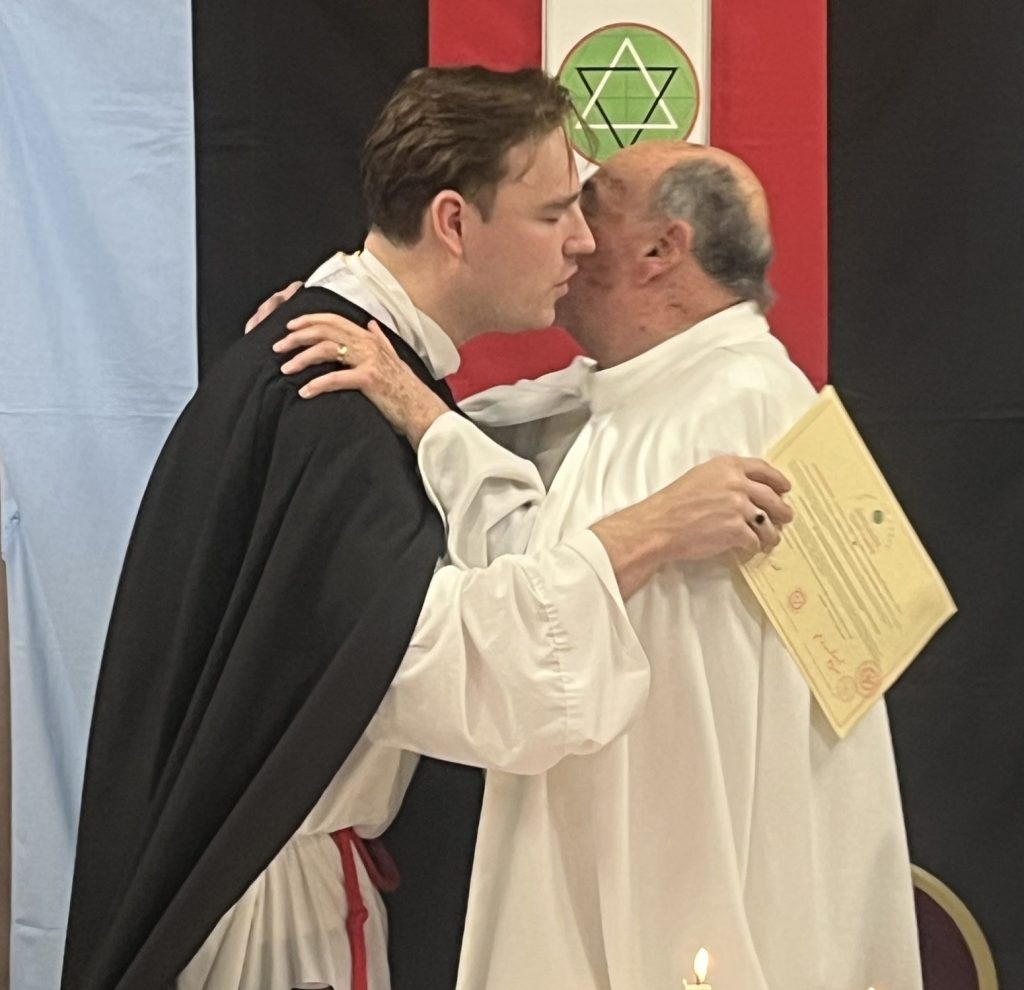
Not all of our work is as grand and festive as this December's, in which our beloved sisters Damabiah and Gadal participated. Still, I invite anyone interested in discovering the beauty of Prague and the specifics of the Czech tradition of Martinism to participate.
7. Finally, what message would you like to convey to our Brothers and Sisters of the French-speaking Martinist Orders, and to all those who are drawn today to the Martinist path?
The freedom that Martinism values so highly is not self-evident. To be free means to serve with strength and love. Strength is our life. And love is the light that we must spread like the flame of a candle. Let us therefore cherish this freedom and be the first to protect it in ourselves and in others. Freedom allows us to become luminous and alive.
The freedom that Martinism values so highly is not self-evident. To be free means to serve with strength and love. Strength is our life. And love is the light that we must spread like the flame of a candle. Let us therefore cherish this freedom and be the first to protect it in ourselves and in others. Freedom allows us to become luminous and alive.